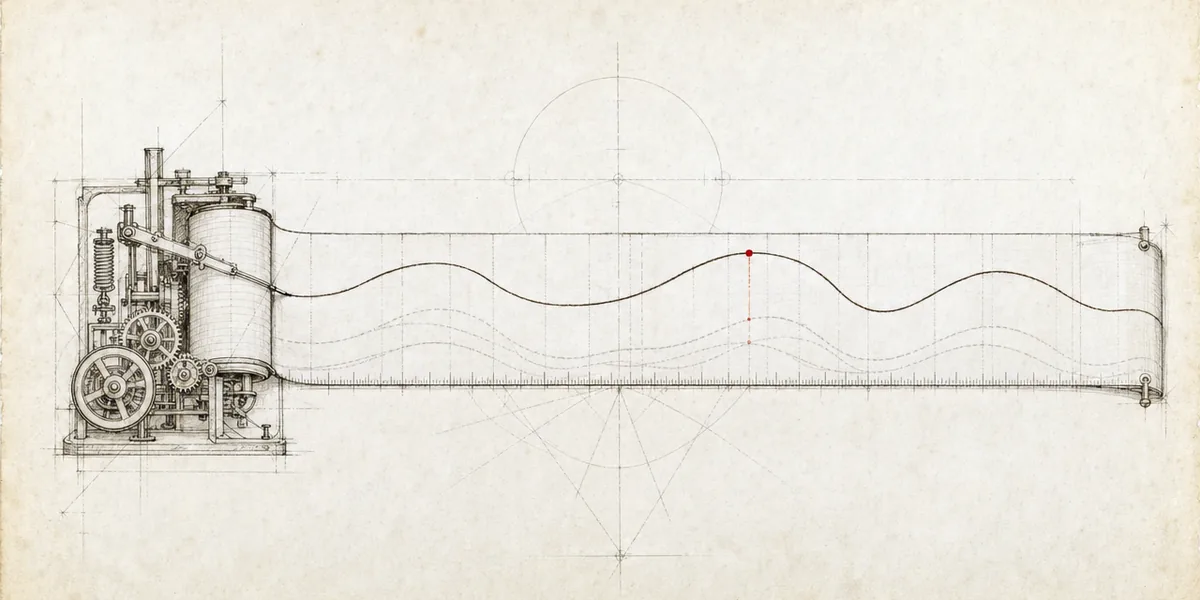
Overstory places current events in historical and geopolitical context. It gathers news coverage into story arcs, each a story that runs for weeks or months, and then builds around each arc the context the coverage assumes but does not supply: the history the story continues, the precedents it echoes, the scholarly frameworks that explain what is happening, and the open questions that would settle it.
The arcs
An arc is the unit. The front page groups the active ones into currents, such as great power security realignment, regional wars and crises, tech consolidation and governance, and democracy under strain, and marks each arc active or dormant as coverage rises and falls. On an arc page, the frontier says where the story stands now, the arc so far is its dated chapters, and a pulse chart counts the distinct outlets covering it each day. People, organizations, and places named in the coverage link to reference entries.
The context
Once an arc has run long enough to be judged history, Overstory builds a reading layer under it.
The long view is a lineage: a dated sequence of the events the story continues, reaching back as far as the record goes, each entry cited to its source. For a 2026 fight over an attorney general nomination, the lineage runs from the Judiciary Act of 1789 through the Saturday Night Massacre to the present.
Echoes name the historical precedents the story recalls, and a deep-context essay sets the current events against them, citing every claim to the outlet and date it came from.
Lenses are frameworks from political science, international relations, economics, and related fields, about thirty of them: two-level games, securitization, weaponized interdependence, democratic backsliding, deterrence and coercive diplomacy, the Collingridge dilemma, fiscal dominance. Each lens carries its canon, the roles it asks you to fill and the questions it asks. An arc read through a lens has those roles filled by the actors in the story and says what the lens expects to happen next, and a lens page lists every arc it has been applied to, so one framework can be followed across stories.
What it is about lists the open questions in the arc and what would settle each one. Who to read is a short bibliography of scholarly work on the subject, each entry with a line on why it bears on the story.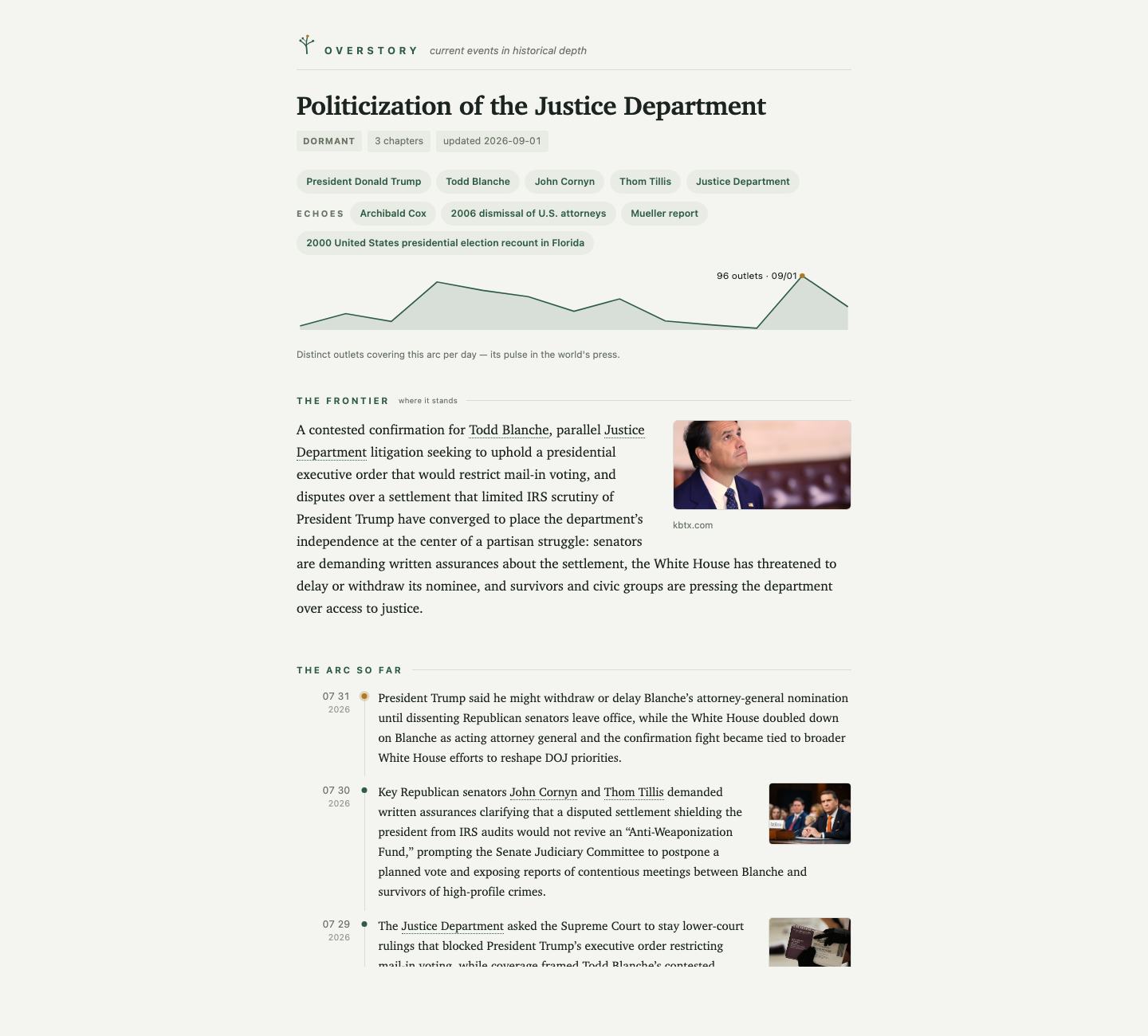
Partners
Built at Northwestern University's Knight Lab. Live at overstory.knightlab.com.