Django's User model carries one email address. People sign up with one address, move to another, keep a work address alongside a personal one, and expect any of them to reach them and identify them.
django-multimail, a library I wrote and maintained from 2011 to 2014, added an EmailAddress model related to the existing User and left User alone. It installed as an ordinary app, so a project already on Django's authentication kept what it had and gained verified addresses.
from multimail.models import EmailAddress

EmailAddress.objects.create(email='user@example.com', user=u)
# verification mail is on its way
Verification
Each address has its own verified flag. Creating one sends the verification mail, and following the link sets the flag. Saving a User creates an address from User.email, so existing users appear in the new model with no migration.
Verification links take their domain from Django's sites framework, or from a domain or URL set in settings. Deactivating a user deletes any addresses they never verified. An optional authentication backend lets a user log in with any of their addresses.
Availability
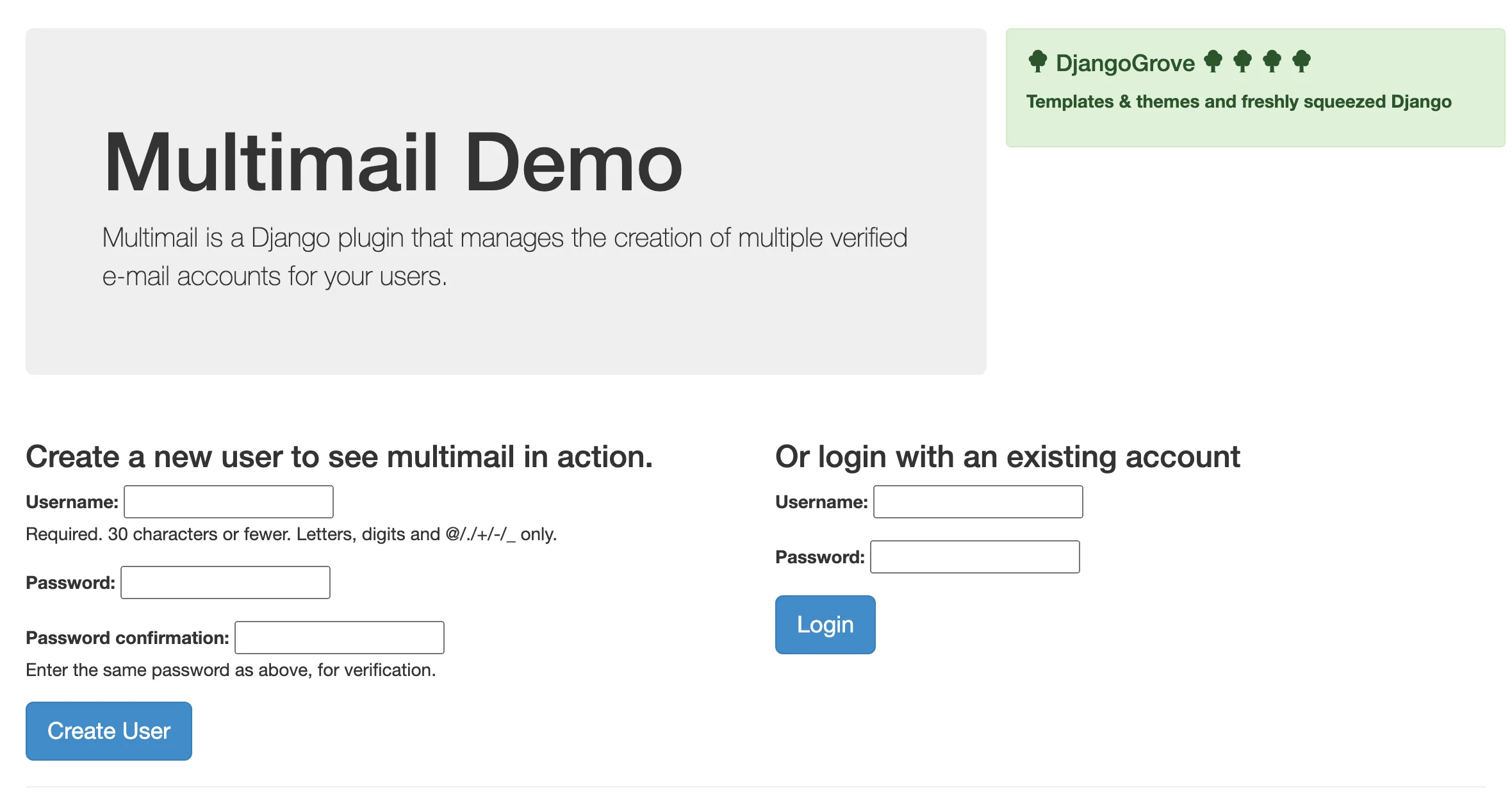
Published on PyPI as django-multimail, MIT licensed, and tested against Django 1.4 through 1.7. It is no longer maintained and the repository is archived. A demo site ran at django-multimail.com, where a visitor could create an account and watch the verification flow.